 HOME
HOME 3D RENDERING
 3D SCANNING
 XR DEVELOPMENT
We Create 360 Panoramic Tours
3D Walkabout is an Australian 3D creative studio that designs amazing 360 Virtual Tours. A fantastic way to walkthrough and explore any location, inside or out!
360 Virtual Tours
360 virtual tours offer businesses a powerful tool to showcase their locations, providing a dynamic and immersive experience for potential customers. These photographic tours blend drone panoramas and video footage with high-resolution ground panoramas, creating a comprehensive view of the space. Custom branding elements further reinforce a company’s identity. Such tours enable businesses to transcend geographical barriers, making it easier for potential customers to explore their premises from anywhere in the world. This level of accessibility enhances engagement, trust, and decision-making, resulting in increased customer conversion rates. Whether it’s a restaurant, a hotel, a real estate property, or a retail store, 360 virtual tours offer a competitive edge by providing an interactive and visually compelling glimpse of what the business has to offer, ultimately boosting its online presence and revenue.
Also take a a look at: Matterport 3D Tours (for Built Spaces) | Matterport CGI Tours (for Unbuilt Spaces)
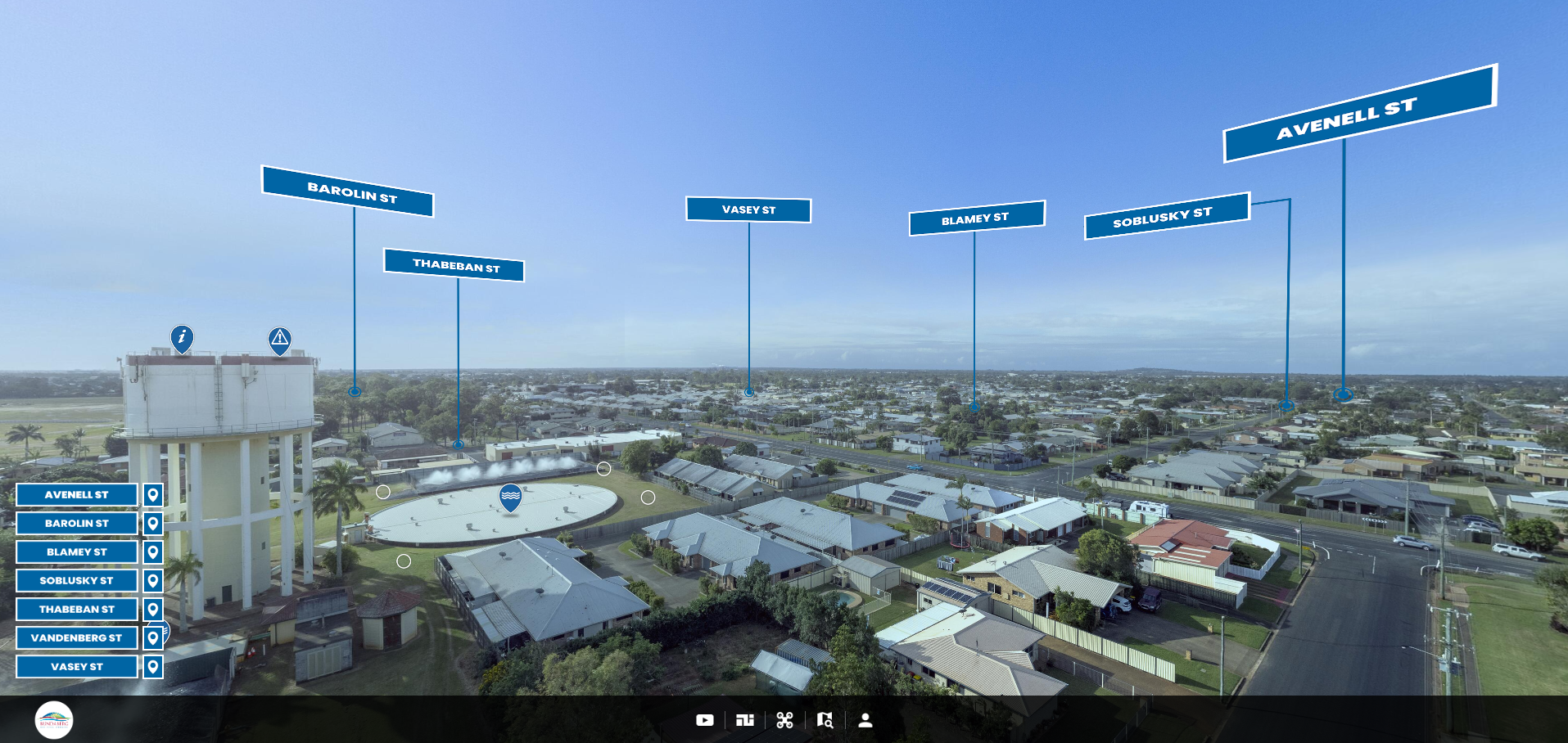
Bundaberg Water Treatment Plant
Bundaberg Regional Council currently operates eight (8) wastewater treatment plants (WWTP) under an Environmental Licence governed by the Department of Environment and Science. Our team was commissioned to create a 360 virtual tour combining aerial panos and ground shots to improve communication & familiarisation.
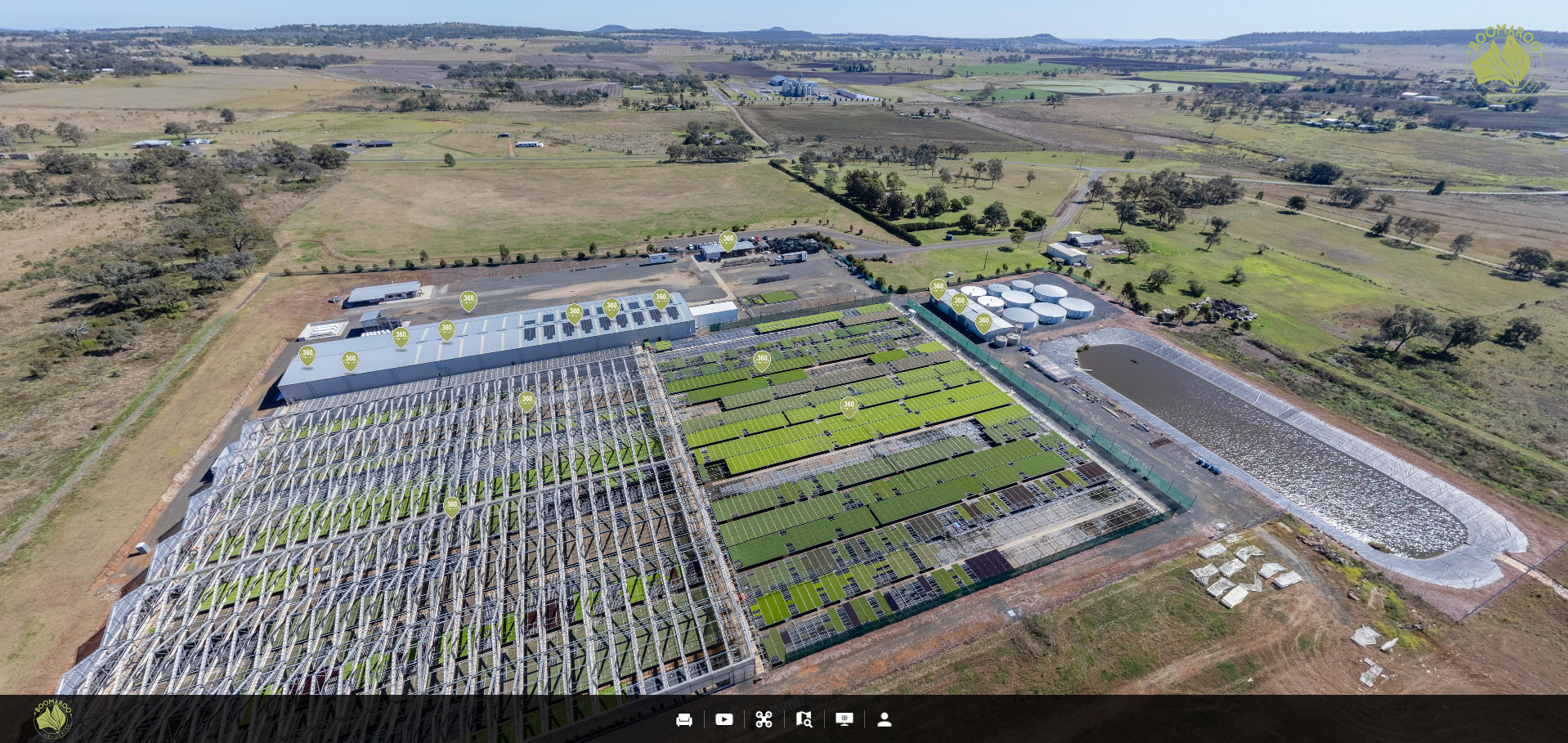
Boomaroo is a world-class wholesale supplier of vegetable seedlings to the fresh produce industry and potted greenlife products to the garden industry. Located within South-east Queensland’s prime agricultural hub, Boomaroo Nurseries’ Southbrook facility is the most advanced and efficient vegetable seedling nursery in the Southern Hemisphere.

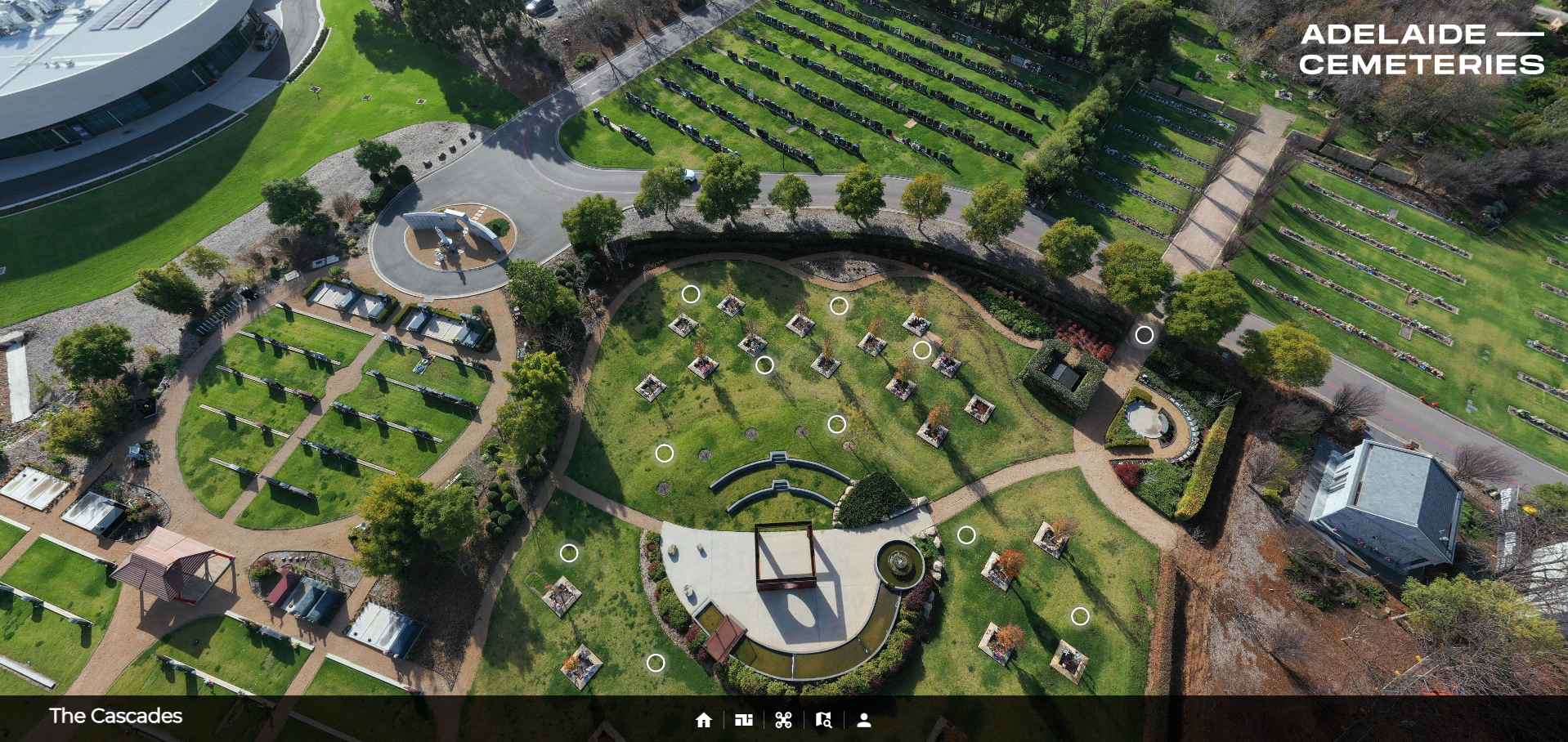
Set in Smithfield Memorial Park is Pear Tree Grove. This lawned area, planted with ornamental pear trees, provides a peaceful setting where families can commemorate the life of a loved one. With burial sites arranged neatly around the base of each tree, Pear Tree Grove offers beautiful choices by which to remember a loved one.
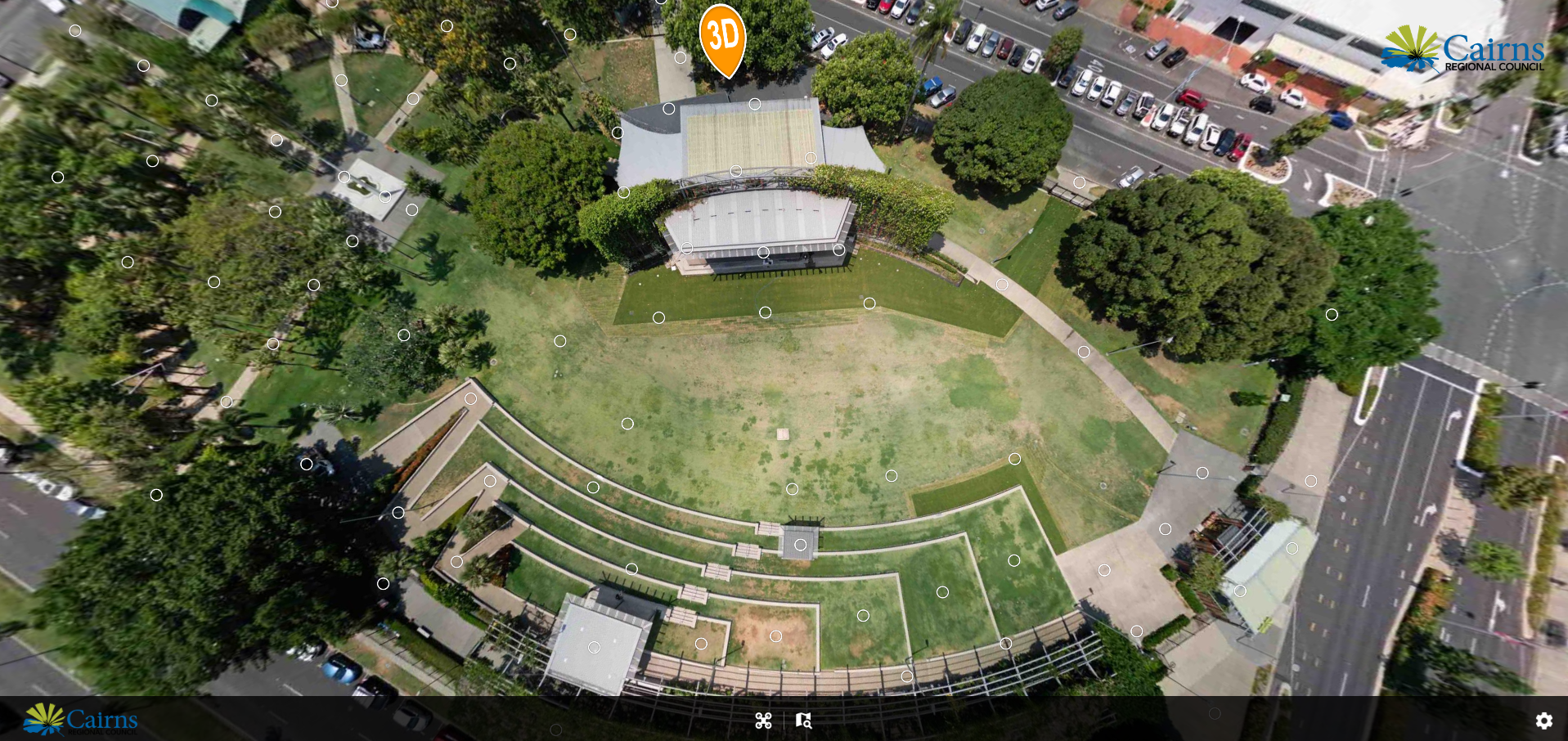
The Cascades garden takes its name from its unique feature, a fountain bubbling with relaxing water that steps down through a curved stream wrapping around a central sculpture. The tiered lawns here form a natural, open amphitheatre, a welcoming space that’s perfect for small family gatherings and quiet reflection.
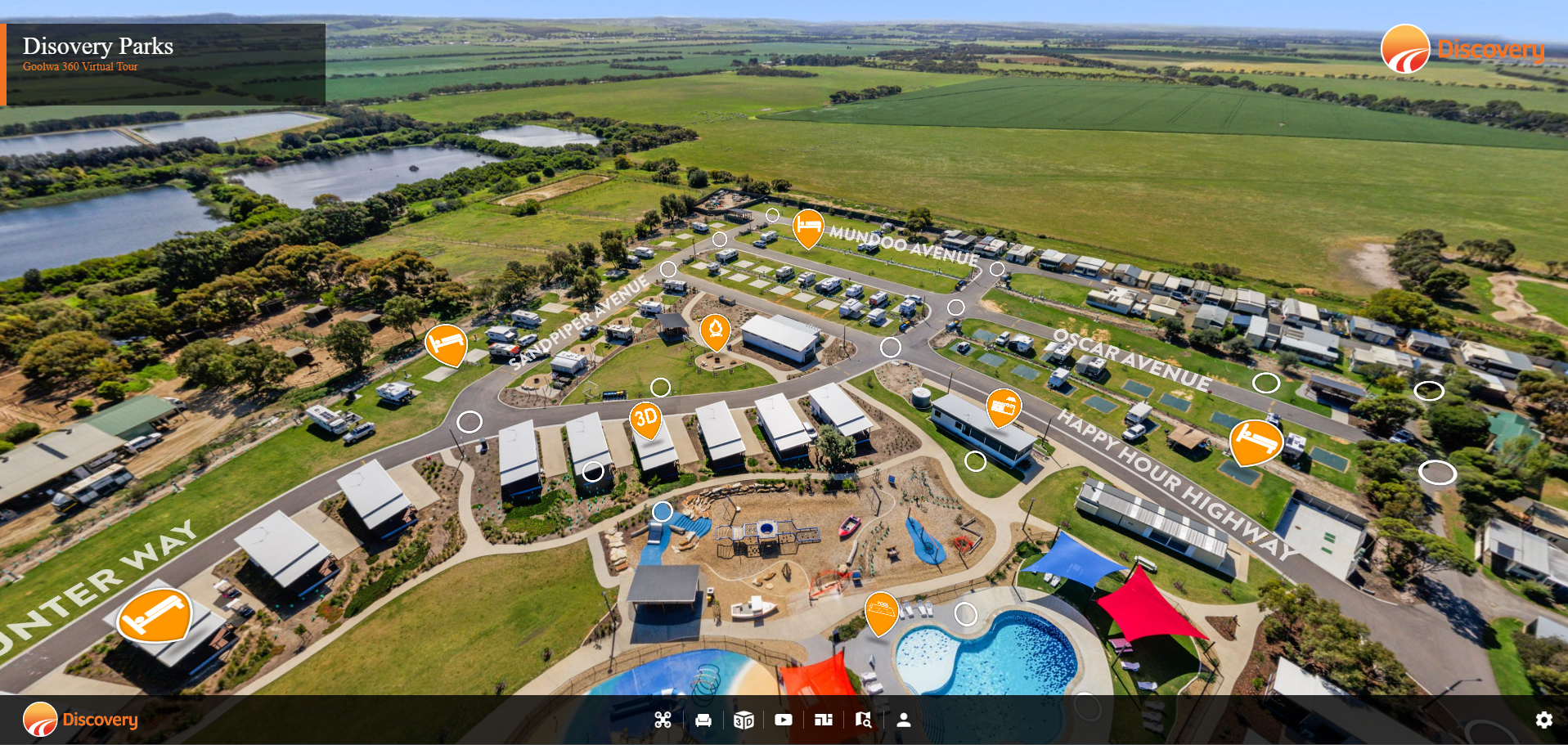
Discovery Parks run a network of around 100 holiday parks nationwide across Australia. They wanted a new and exciting way to showcase each of their parks to a wider audience. We created a custom high-end virtual tour combining drone footage and panoramas with ground panos and Matterport tours.
This tour of the Munro Martin Parklands was part of a wide 3D visualisation project that involved creating 3D animations for the Cairns Performing Arts Centre, the Tanks Arts Centre and the Court House Gallery. Designed to showcase these locations this tour of the park included drone & ground panoramas.
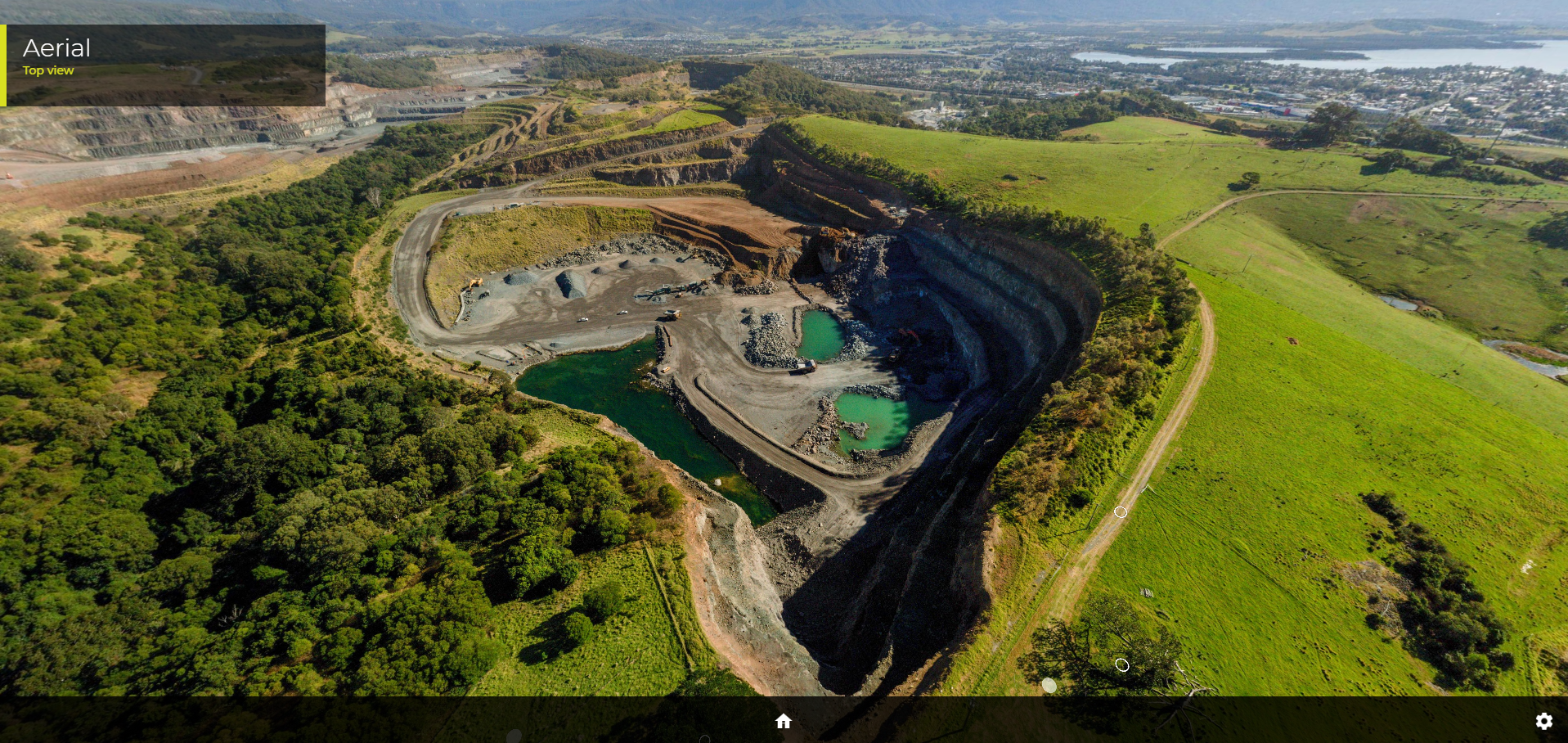
This 360 tour tells part of the story of the Dunmore hills quarry site from the 1920’s to modern day with a focus on the original farm settlements and their pioneering families. This tour is accompanied by a 3D animation that combined historical data of the area with drone based photogrammetry and Google Earth.
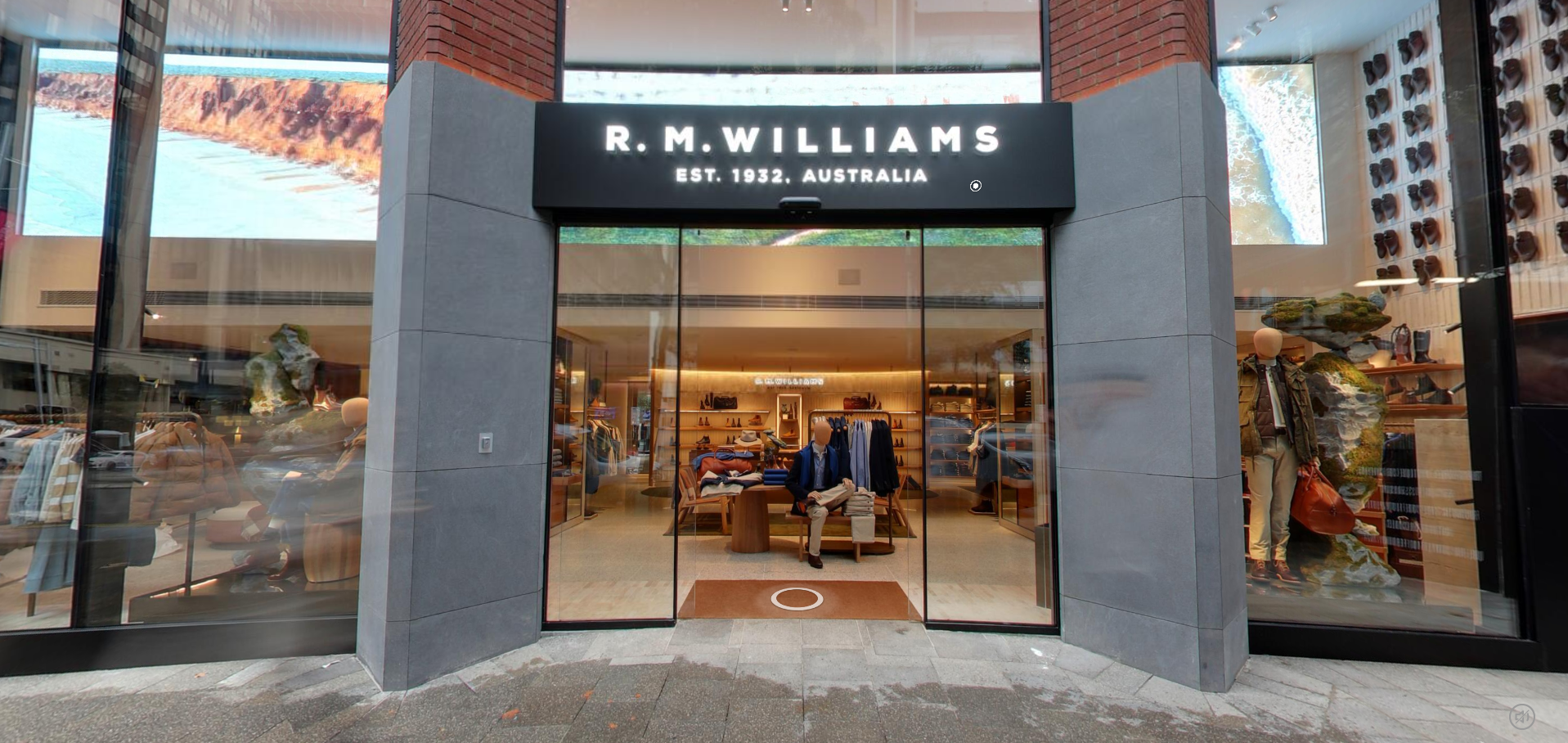
In its nine decades of existence, R.M.Williams has become one of the best-known – and best-loved – footwear brands in the world. Originally built for the men and women of the rugged, unforgiving Australian outback, our iconic one-piece-leather boots have gone on to grace the feet of millions of people.
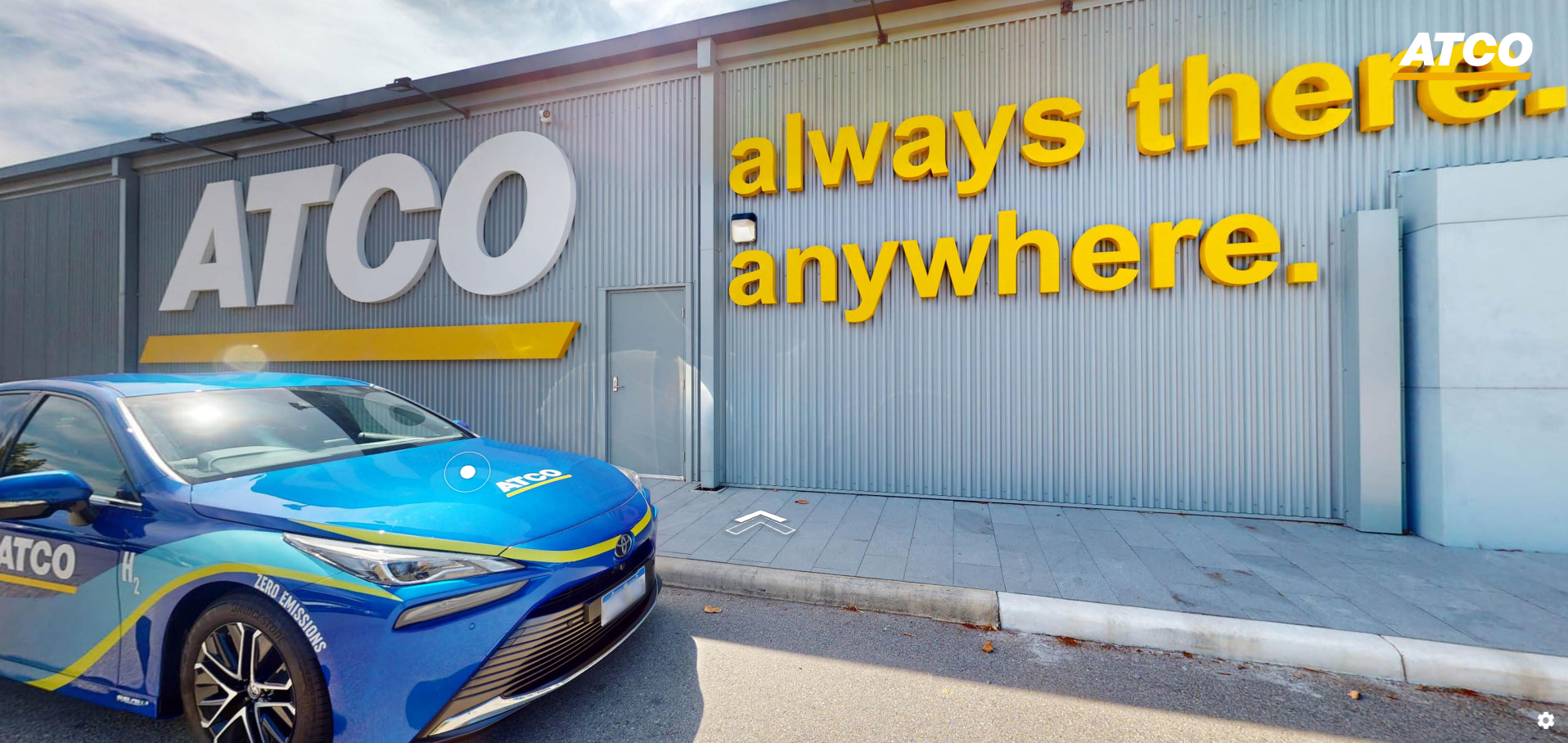
Located at ATCO’s Jandakot Operations Centre in Western Australia (WA), ATCO and Fortescue Future Industries (FFI) recently collaborated on the construction and operation of WA’s first Hydrogen Refuelling Station (HRS). The project was awarded $1 million from the WA Government’s Renewable Hydrogen Fund.
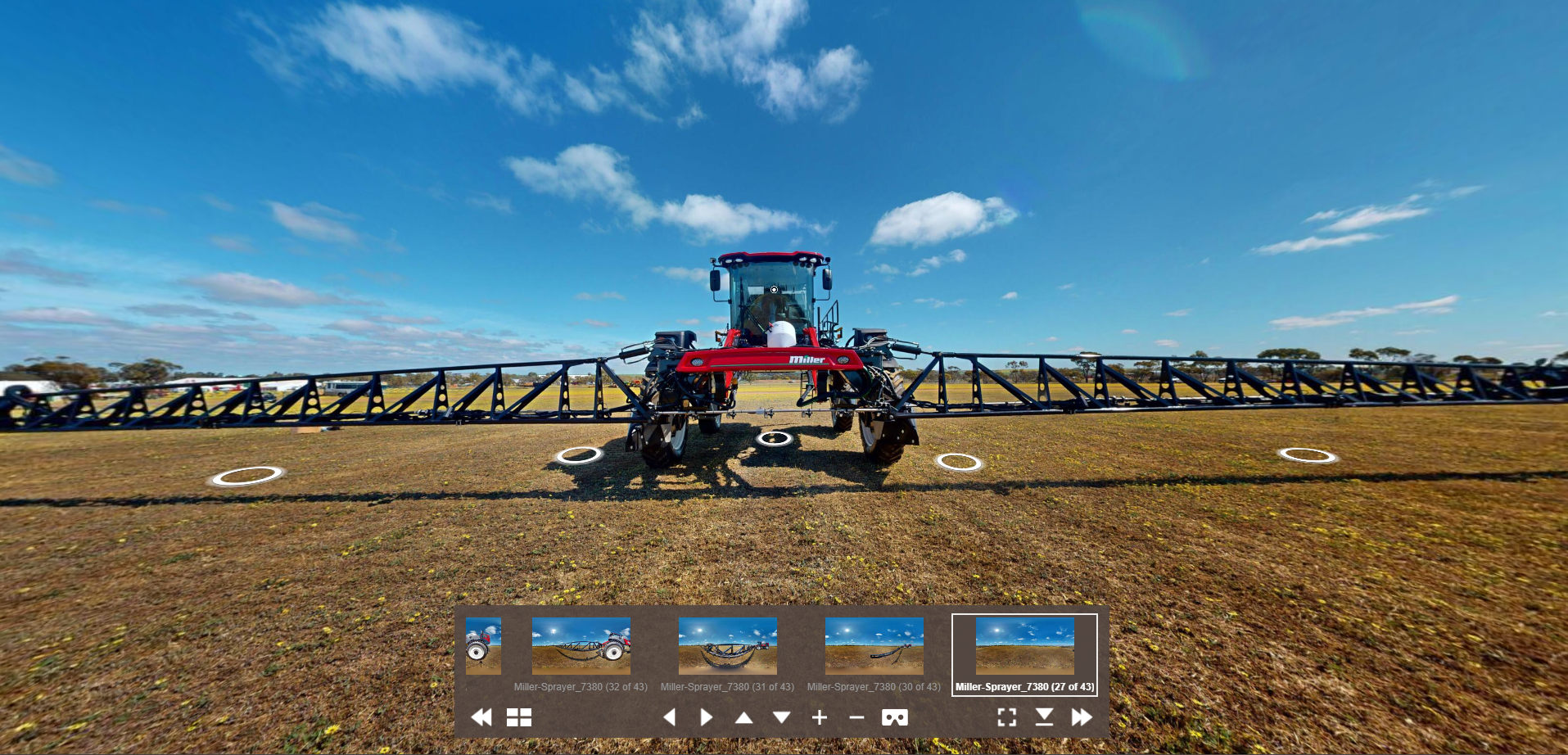
This tour was created for our client to showcase the key features of this complex bit of machinery to potential buyers and stakeholders.
Enquire about 360 Virtual Tours
Get pricing, timelines, and expert guidance for your 360° virtual tour project.
From high-quality panoramic photography to fully immersive 360° virtual tours, we create engaging digital experiences that showcase your space with clarity and impact. Using professional-grade equipment, we deliver fast, accurate results that are ready to share across web, mobile, and VR. Fill out the form to receive our 360° virtual tour pricing guide and understand exactly how your project will run — from capture through to final delivery. Or call us on 1300 00 3392 to get started today.
What are the benefits of using 360 virtual tours for businesses?
Enhanced Engagement: 360 virtual tours captivate potential customers, holding their attention longer and encouraging exploration.
Increased Conversions: By offering an immersive experience, businesses can convert more visitors into paying customers.
Global Reach: Overcome geographical limitations, allowing people from anywhere to virtually visit and engage with your location.
Transparency and Trust: Transparency is promoted as customers can explore the location thoroughly, fostering trust in your business.
Showcasing Features: Highlight specific features, decor, or amenities that set your business apart from competitors.
Time and Cost Savings: Reduce the need for physical site visits, saving time and resources for both customers and businesses.
Custom Branding: Incorporate branding elements to reinforce your business identity within the virtual tour.
Mobile Compatibility: Accessible on various devices, making it convenient for users to explore your location.
Interactive Marketing Tool: A unique marketing asset that can be embedded on websites and shared on social media to attract and engage potential customers.
Data Insights: Gather valuable analytics about user behavior within the virtual tour to refine marketing strategies and improve the user experience.
What are the benefits of 360 virtual tours?
360 virtual tours boost engagement. They captivate visitors’ attention, encouraging them to spend more time exploring the premises. This prolonged engagement can increase the likelihood of conversion as customers become more acquainted with the offerings and atmosphere.
These tours transcend geographical barriers, offering a global reach. Prospective clients can visit the location virtually from anywhere in the world, making it a valuable asset for businesses targeting international audiences.
Transparency and trust are other key advantages. Virtual tours provide an authentic and unfiltered view of a business’s facilities, fostering trust and confidence among customers. They can explore every nook and cranny, gaining a comprehensive understanding of the space.
Custom branding within the tours reinforces a business’s identity, ensuring a seamless connection between the online and physical presence. It’s an opportunity to showcase unique features, decor, or amenities that set the business apart from competitors, driving a distinctive brand image.
360 tours save time and costs by reducing the need for physical site visits. Users can explore a property at their convenience without the need for a physical visit. They are also mobile-compatible, accessible on various devices, making it convenient for users.
The interactivity of virtual tours allows them to be an exceptional marketing tool. They can be embedded on websites and shared on social media, attracting and engaging potential customers in a unique and compelling way.
Finally, data insights from user behavior within the virtual tour provide valuable analytics. These insights can refine marketing strategies and improve the user experience, making virtual tours a versatile and adaptive tool for businesses in various industries. Overall, the benefits of creating 360 virtual tours for businesses are numerous, ranging from customer engagement and trust-building to global accessibility and cost savings.
Frequently Asked Questions
What is an as-built survey and how does 3D laser scanning help?
An as-built survey documents the exact dimensions and layout of an existing building or structure. Using 3D laser scanning, millions of measurement points are captured to create an accurate digital representation of the space. This data can then be used to produce BIM models, CAD drawings, floor plans and point cloud datasets, helping architects and engineers design renovations or new works with confidence.
What is the difference between LiDAR scanning and photogrammetry?
LiDAR scanning uses laser sensors to measure distances and capture millions of highly accurate spatial points, creating a precise 3D point cloud of a building or environment. Photogrammetry uses overlapping photographs to reconstruct 3D models, which can be useful for visualisation but is generally less accurate for measurement. For architectural surveys, construction planning and Scan-to-BIM projects, LiDAR scanning is typically preferred because it delivers higher accuracy and more reliable spatial data.
How much does a 3D laser scanning project cost?
The cost of a 3D scanning project depends on several factors including site size, building complexity, deliverables required and the type of scanner used. Smaller projects may be completed for a few thousand dollars, while larger commercial or infrastructure projects require more extensive capture and modelling work. A tailored quote is typically provided after reviewing the project scope.
Can 3D scanning be used for renovations and refurbishment projects?
Yes. Laser scanning is widely used to create accurate existing-conditions documentation before renovation or refurbishment work begins. By capturing the building geometry in detail, designers and contractors can reduce measurement errors, improve coordination and avoid costly rework during construction.
Do you provide 3D laser scanning services across Australia?
Yes. 3D Walkabout operates scanning teams across major Australian cities including Sydney, Melbourne, Brisbane, Perth and Adelaide, and can deploy to regional and remote locations nationwide. Our team regularly works on projects ranging from single buildings to large industrial and infrastructure sites.
What is Scan-to-BIM modelling?
Scan-to-BIM is the process of converting laser scanning data into a Building Information Model (BIM). Using the captured point cloud, specialists create detailed digital models of the building in software such as Autodesk Revit. These models can include architectural, structural and MEP elements depending on the required Level of Development (LOD).
What is a point cloud and how is it used?
A point cloud is a digital dataset made up of millions of measured points that represent the exact geometry of a building or environment. These datasets allow architects, engineers and contractors to analyse existing conditions and create accurate models. Point clouds are commonly used as the foundation for Scan-to-BIM and as-built documentation.
What deliverables do you receive after a 3D scanning project?
Typical deliverables include registered 3D point cloud datasets, BIM models, CAD drawings, panoramic imagery and digital walkthroughs. Files can be provided in formats such as RCS/RCP, E57, Revit models and DWG drawings so they integrate easily into common design and construction software.
How long does a 3D laser scanning project take?
The time required depends on the size and complexity of the site. Smaller buildings can often be captured in a few hours, while larger commercial or industrial sites may take one or more days of scanning. Once the data is captured, processing and deliverables such as point clouds or BIM models are typically delivered within several business days.
What types of buildings and spaces can be scanned?
3D laser scanning can be used on almost any built environment including residential buildings, commercial offices, retail centres, industrial warehouses, hospitals, schools, infrastructure sites and heritage buildings. Large facilities such as campuses, factories and shopping centres can also be scanned using mobile LiDAR technology.
How accurate is LiDAR scanning for construction projects?
Modern terrestrial laser scanners can capture measurements with millimetre-level accuracy, depending on the equipment used. Survey-grade scanners such as the Leica RTC360 can achieve accuracy of around ±1.9 mm at 10 metres. This level of precision makes laser scanning suitable for architectural surveys, construction verification, and detailed BIM modelling.
What is 3D laser scanning for buildings?
3D laser scanning is a reality capture technology that uses LiDAR sensors to measure buildings and environments with millions of precise data points. The result is a highly detailed 3D point cloud that represents the exact geometry of the space. This data can then be used for Scan-to-BIM modelling, CAD drawings, digital twins, and building documentation.