HOME
HOME 3D RENDERING
 3D SCANNING
 XR DEVELOPMENT
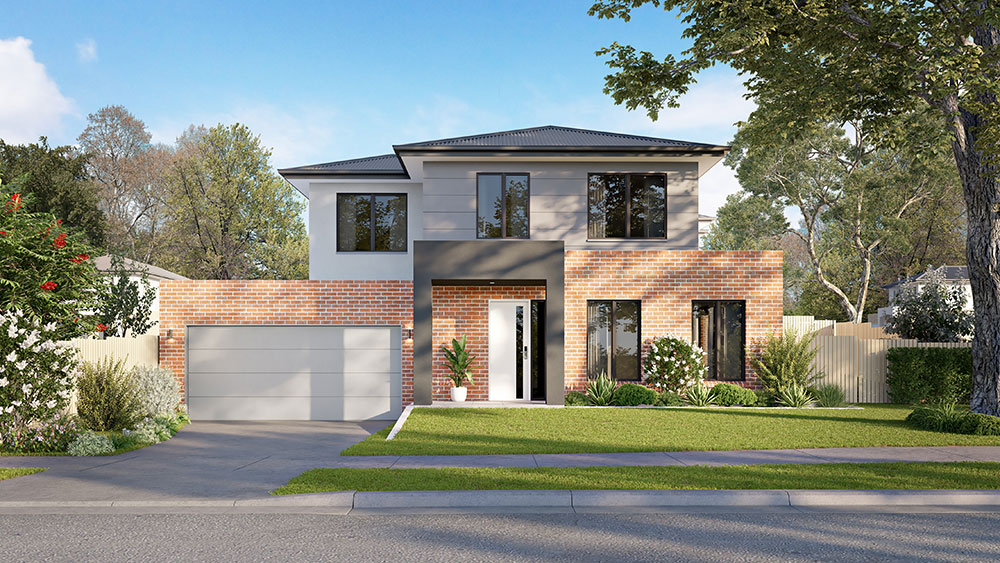
If you’re looking to grow your customer base, making your business more accessible to more people is a great first step — and 3D virtual tours can help you accomplish just that.
First things first — what are 3D virtual tours anyway?
Also known as 3D tours, 3D virtual tours are a way for people to experience physical spaces without having to physically be present, thanks to immersive virtual renderings of said spaces.
All these virtual experiences require from users — which in this case are your existing and potential customers — a computer or smart device and an internet connection. This means these tours are available to practically anyone from anywhere in the world.
What are 3D virtual tours used for?
The uses for 3D virtual tours are practically endless. As long as you have a space that you want to make available for exploration to people regardless of what part of the world they’re from, you can use 3D tours.
To give you a better idea of just how useful these immersive virtual experiences are, here are a couple of real-world applications:
Virtual open houses or showings for real estate companies
Virtual tours for hotels and other rental properties
Virtual training for industries such as construction and public safety
Virtual tours for tourism organisations
How can 3D tours help my business?
3D tours can help your business in a wide variety of ways. Below are some examples:
It effectively eliminates the need for customers to be physically present to experience what your business has to offer. This means instead of just serving people who live nearby, you’ll be able to easily tap potential customers from anywhere in the world.
Instead of having to limit the number of potential customers you serve at a time to the size of the physical space you have, you can now give tours to however many people your server can handle in one go.
Speaking of giving tours, 3D tours also eliminate the need to have an actual staff member present to serve as a guide at all times. Both potential and existing customers can come in and do the exploration on their own.
Finally, 3D virtual tours also give you a significantly more interesting way to market whatever it is you’re selling. Ever heard of the saying ‘show, don’t tell’? Well, that’s exactly what these virtual experiences allow you to do.
Instead of being limited to just telling people how amazing your offerings are, with 3D tours, you can let the experience do the talking.
How can I create 3D virtual tours for my business?
To create 3D virtual tours for your business, you’ll need to perform a 3D scan of the space you want to render virtually. But don’t worry — you don’t have to do this yourself.
When it comes to 3D scanning, Australia is home to one of the top studios around with 3D Walkabout. Just tell us what you need, and we’ll take care of the details for you. We have all the tools, know-how and experience required to get you the results you’re looking for.
Make your business more accessible today with 3D virtual tours
When it comes to growing your customer base fast through enhanced accessibility, few methods come close to 3D virtual tours. Not only do they effectively eliminate geographical barriers, but they also take physical space limitations out of the equation. This allows you to serve significantly more people at a time, 24 hours a day, seven days a week.
See for yourself just how powerful 3D tours are when it comes to enhancing business accessibility. Talk to us today to find out more.
Summary: How can 3D virtual tours enhance business accessibility?
3D Virtual Tours offer an immersive way for people to explore physical spaces without being present, requiring only a computer or smart device and an internet connection.
These tours find versatile applications in real estate open houses, hotel and property rentals, training in industries like construction, tourism organizations, and more.
Businesses benefit from 3D tours by reaching a global audience, serving multiple visitors simultaneously, reducing the need for on-site guides, and creating engaging marketing content.
3D tours provide a visually compelling way to showcase products or services, allowing the experience to speak for itself.
Creating 3D virtual tours involves a 3D scan of the physical space, and companies like 3D Walkabout in Australia specialize in this process, ensuring a smooth and efficient experience.
FAQs
What is an as-built survey and how does 3D laser scanning help?
An as-built survey documents the exact dimensions and layout of an existing building or structure. Using 3D laser scanning, millions of measurement points are captured to create an accurate digital representation of the space. This data can then be used to produce BIM models, CAD drawings, floor plans and point cloud datasets, helping architects and engineers design renovations or new works with confidence.
What is the difference between LiDAR scanning and photogrammetry?
LiDAR scanning uses laser sensors to measure distances and capture millions of highly accurate spatial points, creating a precise 3D point cloud of a building or environment. Photogrammetry uses overlapping photographs to reconstruct 3D models, which can be useful for visualisation but is generally less accurate for measurement. For architectural surveys, construction planning and Scan-to-BIM projects, LiDAR scanning is typically preferred because it delivers higher accuracy and more reliable spatial data.
How much does a 3D laser scanning project cost?
The cost of a 3D scanning project depends on several factors including site size, building complexity, deliverables required and the type of scanner used. Smaller projects may be completed for a few thousand dollars, while larger commercial or infrastructure projects require more extensive capture and modelling work. A tailored quote is typically provided after reviewing the project scope.
Can 3D scanning be used for renovations and refurbishment projects?
Yes. Laser scanning is widely used to create accurate existing-conditions documentation before renovation or refurbishment work begins. By capturing the building geometry in detail, designers and contractors can reduce measurement errors, improve coordination and avoid costly rework during construction.
Do you provide 3D laser scanning services across Australia?
Yes. 3D Walkabout operates scanning teams across major Australian cities including Sydney, Melbourne, Brisbane, Perth and Adelaide, and can deploy to regional and remote locations nationwide. Our team regularly works on projects ranging from single buildings to large industrial and infrastructure sites.
What is Scan-to-BIM modelling?
Scan-to-BIM is the process of converting laser scanning data into a Building Information Model (BIM). Using the captured point cloud, specialists create detailed digital models of the building in software such as Autodesk Revit. These models can include architectural, structural and MEP elements depending on the required Level of Development (LOD).
What is a point cloud and how is it used?
A point cloud is a digital dataset made up of millions of measured points that represent the exact geometry of a building or environment. These datasets allow architects, engineers and contractors to analyse existing conditions and create accurate models. Point clouds are commonly used as the foundation for Scan-to-BIM and as-built documentation.
What deliverables do you receive after a 3D scanning project?
Typical deliverables include registered 3D point cloud datasets, BIM models, CAD drawings, panoramic imagery and digital walkthroughs. Files can be provided in formats such as RCS/RCP, E57, Revit models and DWG drawings so they integrate easily into common design and construction software.
How long does a 3D laser scanning project take?
The time required depends on the size and complexity of the site. Smaller buildings can often be captured in a few hours, while larger commercial or industrial sites may take one or more days of scanning. Once the data is captured, processing and deliverables such as point clouds or BIM models are typically delivered within several business days.
What types of buildings and spaces can be scanned?
3D laser scanning can be used on almost any built environment including residential buildings, commercial offices, retail centres, industrial warehouses, hospitals, schools, infrastructure sites and heritage buildings. Large facilities such as campuses, factories and shopping centres can also be scanned using mobile LiDAR technology.
How accurate is LiDAR scanning for construction projects?
Modern terrestrial laser scanners can capture measurements with millimetre-level accuracy, depending on the equipment used. Survey-grade scanners such as the Leica RTC360 can achieve accuracy of around ±1.9 mm at 10 metres. This level of precision makes laser scanning suitable for architectural surveys, construction verification, and detailed BIM modelling.
What is 3D laser scanning for buildings?
3D laser scanning is a reality capture technology that uses LiDAR sensors to measure buildings and environments with millions of precise data points. The result is a highly detailed 3D point cloud that represents the exact geometry of the space. This data can then be used for Scan-to-BIM modelling, CAD drawings, digital twins, and building documentation.
How virtual reality is used in medicine?
Virtual reality has seen a lot of success in the area of pain management. VR is a highly effective method of drawing and holding the attention of a patient, stimulating the brain and keeping patients entertained. This immersion is ideal for potentially painful procedures like skin grafts or injections.
Do doctors use virtual reality?
Yes! Doctors use VR training for a series of purposes, including explaining in more detail what a patient’s condition means. By putting a patient into a VR landscape, doctors use hyperrealistic models to present the injuries that a patient is suffering from and how the causes of these injuries worsen conditions, acting as a preventative measure.
Is VR used in hospitals?
VR is being used in hospitals, both in training staff and in patients. Patients use VR for a range of reasons, including learning all about their treatments, stimulating the minds of patients undergoing psychological therapy and using games to support the use of physical therapy in the case of long-term injuries.
How is VR used in healthcare and surgery?
VR primarily has been used in surgery and training new surgeons. By creating 3D environments and virtual patients ready for interaction, trainee surgeons complete the procedures that they would on standard patients without the hospital having to pay for dummies for the operation or risking the health of actual patients.
How has virtual reality helped in healthcare?
Virtual reality has helped in healthcare in a range of ways, with one of the most important being information transfer. Patients specifically learn a lot through the use of VR in healthcare, as they see visual representations of their own illnesses or conditions and watch 3D representations of what their treatments are.
What is virtual reality in healthcare?
Virtual reality refers to the use of systems that create 3D environments that users visit through the use of VR headsets and controllers that go into a user’s hands. VR in healthcare refers to the use of these systems in a healthcare environment, typically through training and patient interaction.