HOME
HOME 3D RENDERING
 3D SCANNING
 XR DEVELOPMENT
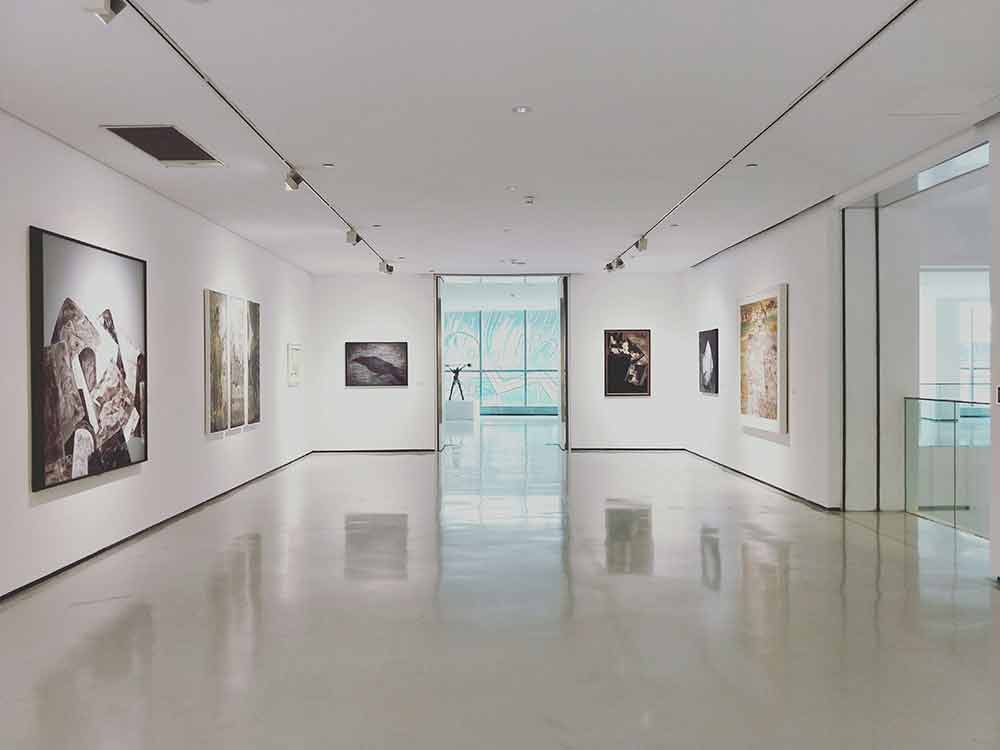
The term ‘look but don’t touch’ is a phrase that might be on its way out thanks to AR.
Galleries and museums have long been places where artefacts and experiences were protected by panes of glass (and rightly so). But now, with AR, they’re becoming places to interact, explore, and truly immerse yourself in history, art, and science.
AR is helping museums bring the past to life, turn learning into an experience, and make even the most complex subjects accessible to everyone, from curious kids to lifelong learners.

Why Does AR Matter in Museums and Galleries?
It’s a fair question, why is AR making such waves in museums and galleries right now?
Firstly, the tech has got better. With better mobile devices, faster internet, and more affordable AR development tools, it’s become far easier for institutions to adopt. What once felt futuristic is now accessible and practical.
Secondly, audiences are changing. Today’s visitors, especially younger generations, are digital natives. They expect interactivity, personalisation, and a sense of engagement beyond static displays. AR does exactly that, turning a passive stroll into an active experience.
And lastly, there’s a growing need to make museums more inclusive and dynamic. AR allows museums to tell more stories, in more ways, offering content in multiple languages, sign language interpretations, or layered context tailored to different interests. It’s a powerful tool for expanding access and deepening understanding without ever needing to change the physical exhibit.

Bringing Exhibits to Life Through Immersive Storytelling
At the heart of every museum or gallery is a story.
Whether it’s the rise and fall of ancient civilisations, the evolution of modern art, or the mechanics of a steam engine, museums and galleries are built around the power of narrative. With AR, people would be able to put on a headset and, theoretically, interact with an ancient artefact, or witness someone like Tutankhamen spring to life (only virtually, don’t worry).
With AR, visitors can see how an object was originally used, who created it, and the world it came from all through a simple tap on their phone or headset.
This kind of immersion makes an already immersive experience even more so. It deepens the emotional connection with the viewer and creates and opens up other narratives and perspectives to explore.
It’s Generally Making Education More Engaging
Museums and galleries have always played a key role in education. But let’s face it, not every student gets excited by glass cabinets and information plaques, as much as every teacher would like.
However, when you accommodate their more digital-pro interests with something like AR, it gives them that extra layer of digital immersion they’ve become used to.
There’s a few ways students and visitors alike might interact with museums and galleries differently, such as:
Exploring ancient ruins in 3D, walking through what they looked like centuries ago
Zooming in on a painting to uncover hidden details or brushstroke techniques
Watching a battle like the Battle of Hastings unfold right on the museum floor with animated reconstructions
Picking up and interacting with ancient artefacts like pottery and scriptures from ancient Greece
For students, this may also completely change the way school trips are approached and handled. Mainly, they should be a lot more fun for everyone involved. They encourage deeper engagement, spark curiosity, and help students absorb information by doing rather than just looking.
And yes, it seems like AR might lean more in the favour of children and students, but the benefits aren’t just limited to them. Adult visitors, university students, and even casual tourists all benefit from interactive layers of content. AR allows each visitor to tailor the experience to their level of interest and understanding.

Visualising the Complex with 3D Models
Some of the most fascinating topics covered in museums and galleries are also the trickiest to understand. This is especially true when they involve scale, structure, or abstract ideas.
For example, instead of trying to imagine what something might have looked like, visitors can now see it in front of them, interact with it, and explore it from all angles. This would be incredibly immersive with things like the Colosseum of Rome, or viking longships.
Making the invisible visible
We know that AR can bring to life subjects that are too small, too large, or too fragile to display physically, so let’s have a look at a few examples of how this might look.
Ancient architecture – Rebuild ruins digitally to see how structures once stood
Planetary systems – Float through space to understand the solar system’s layout
Engineering feats – Explore the inner workings of engines or machines in 3D
Historic vehicles – Jump into or explore a chariot, longship or carriage to see how they operated
When it comes to the more complex parts of museums and galleries, AR can also help simplify these areas. For example, instead of reading about how photosynthesis works, you could point your phone at a plant in a museum and see the full process animated on screen. Like sunlight entering the leaves, water being drawn from the roots, and oxygen being released.
For historical exploration, instead of a static panel describing the Tudor timeline, you could use AR to scroll through a 3D timeline, triggering animated scenes like Henry VIII signing laws, battles being fought, or fashions evolving, all in chronological order and layered with context.

A New Era for Cultural Exploration
It’s a genuinely super exciting time for AR and museums and galleries who are happy to embrace AR. Of course, they have always been places of discovery, but with augmented reality, that discovery is more immersive, engaging, and personal than ever before.
And that’s why we all go to museums and galleries, right? To take a step back in time and immerse ourselves in timelines, cultures and experiences that are, for the most part, completely beyond our lived experiences.
It’s worth noting as well that AR isn’t a replacement for the natural joy we get from traditional exploring museums and galleries. At its best, it supports what museums already do so well, inspire curiosity, spark emotion, and connect people with the world around them.
Augmented Reality (AR) is opening up exciting new possibilities for museums and galleries—amplifying discovery, deepening engagement, and creating truly personal experiences for visitors.
While AR doesn’t replace the wonder of traditional exploration, it enhances it, bringing timelines, cultures, and stories to life in ways that feel more immersive and emotionally resonant than ever before.
At its best, AR supports the heart of what museums do: inspire curiosity, ignite imagination, and connect us with worlds beyond our own
Why is augmented reality important in the tourism industry?
AR is important in the tourism industry in Australia because the modern world is becoming more modernised and the tourism industry needs to keep up with these developments in order to provide the best user experiences. This could open up areas for even more advanced technology such as metaverse travel and metaverse tourism.
How is augmented reality reshaping travel and tourism?
Augmented reality is making it much easier for tourists to guide their own vacations and locate facilities that they want to visit in new areas, making it easier to market towards them and boost profits using AR.
What is an augmented product in tourism?
An augmented product is a product that adds features or services that make it better than similar products offered elsewhere. In tourism, this may mean having a hotel with AR features that make it easier to locate nearby attractions, for example.
What is AR and VR in tourism?
AR refers to the use of real images overlayed with augmented images or features that enhance the user experience. On the other hand, VR is a completely virtual version of the area, which can be used for tourists to experience a city before actually visiting it.
How is augmented reality used in tourism?
Augmented reality is used in tourism in a variety of creative ways. Tourists are often apprehensive about visiting new areas, especially if they do not speak the language. AR encourages them to visit by offering an interactive element that they are in control of and offers highly accessible information, such as AR tours.
Is VR training cost effective?
When it comes to training and education, virtual reality (VR) can be a cost-effective alternative to traditional classroom lectures. VR lets students experience a real-life scenario in a safe environment that’s not only more engaging but also more cost-efficient.
Is VR training good?
Virtual reality (VR) training is a great way to train employees. It can be used for training employees on how to use a specific piece of equipment or software, as well as teaching them how to perform their jobs in the real world. It’s also useful for educating employees on how to handle a new situation or scenario.
How virtual reality is used in training?
Virtual reality is used in training to simulate real-world situations. It can be used to train a variety of skills, from operating heavy machinery to flying an aeroplane. This is accomplished by using a headset that has built-in headphones, which allow the user to hear what’s going on around them. The headset also blocks out all other sounds.
How do you start virtual reality training?
The first step in virtual reality training is to decide what kind of experience you want to provide your employees with. Do you want them to have an immersive experience with 3D visuals? Do you want them to feel like they’re there? Or do you just want them to learn how different tools work?
What is virtual reality training?
Virtual reality (VR) training is a way to train employees using computer-generated environments that mimic real-world situations. These environments can be created with video game engines or 3D modelling software, and they can be used to simulate any number of scenarios.